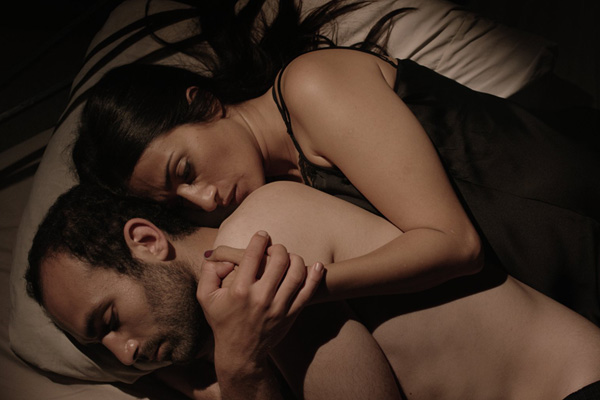
From the get go, one should understand that this is a very poetic film that much like poetry not only seeks different interepretations, but encourages active interaction with each of its viewers. Tala Hadid's film leaves grey areas in the narrative on purpose, for us to engage with her story on a spiritual and metaphysical level perhaps with our own experiences in life. But perhaps an even better adjective to describe the film would be operatic. This adjective is especially true to the rhythm of the film, the arias represented by the moments of sweetness, tenderness and perhaps even fluid cameraworks, exhalting the beauty of nature in its entirety. These moments, however, are always assailed by a sharp sense of urgency, and often a change in rhythm - dramatic crescendos of sorts.
Better yet, this is a film that could be described as symphonic, with its characters interacting a lot like instruments. The criminals in this film are threatening brass, the writer may be the embodiement of the stubborn and determined contrabass, the teacher with her softness and simoultaneous strength retains the characteristics of the tapping of fingers on a piano. The first violin, however, is the little girl, who carries a hopeful flame of innocence constantly under threat and has the power to do anything she wants or can of her own will. She is the one who directly affects the lives of all the other key players in the storyline in the most significant way. Her representation of innocence is metaphorical. Some mistreat it, others cherish it and others reluctantly abandon it, nevertheless its hope and power will forever live on.
It's hard not to be immersed in Tala Hadid's The Narrow Frame of Midnight. It's hard to resist being absorbed and immersed in her world of motion, carried by the tide of the constantly moving reflection of the constant motion of life. Its genuinene emotions are amplified by the fact that the performances of the characters almost ignore the very essence of performance, as the players allow their own lives to influence their acting. Its strength is also in its open and free nature, an identification that lies somewhere between dream and reality - perhaps even alienation from both. It is for all these reasons that it's also very difficult not to find this film a meditative experience as much as an interactive one.